


SALAMMBÔ
THE MUSICAL BY PASCAL REVIAL
FREELY INSPIRED BY GUSTAVE FLAUBERT’S NOVEL

CARTHAGE, 3RD CENTURY
BC
The great Punic city has just triumphed over Rome.
But victory has left it drained.
The mercenaries who fought for Carthage
are still waiting to be paid.
AND THEN
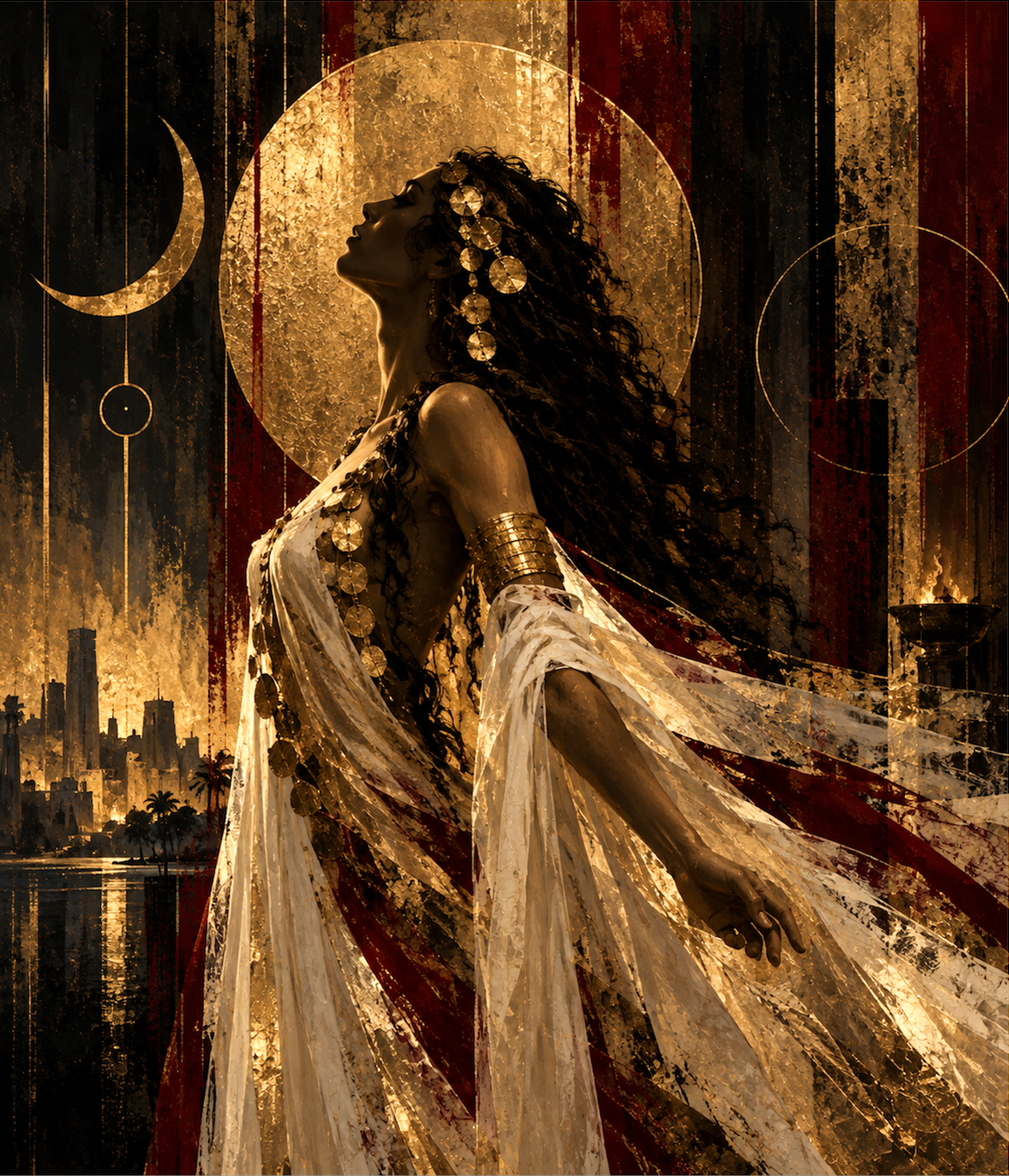
SALAMMBÔ APPEARS.
Salammbô, the musical created by Lyon-based composer Pascal Revial, is freely inspired by Gustave Flaubert’s novel, bringing its tragic world of ancient Carthage to the stage through music, drama and dance.
At the heart of this tragic musical lies a chain of impossible loves.
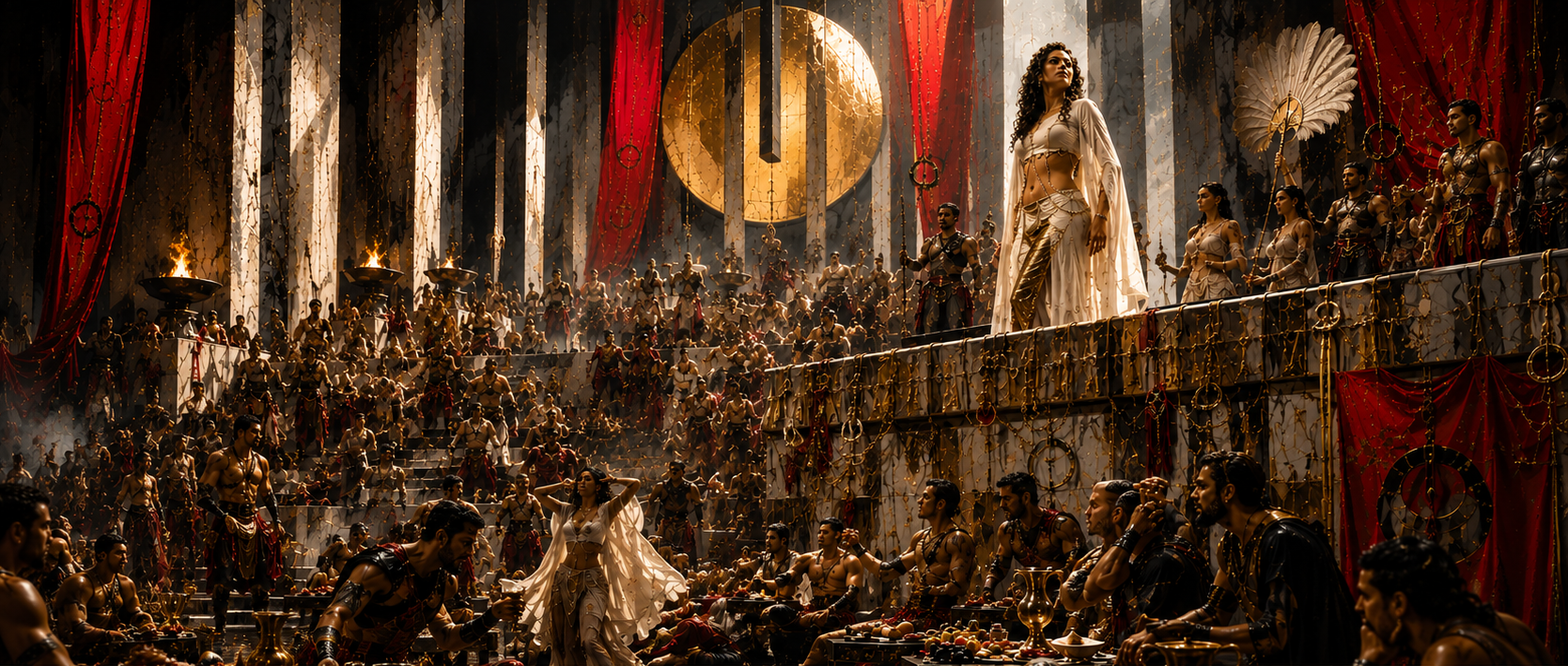
In Carthage, in the gardens of Hamilcar’s palace, a great feast is held for the mercenaries who served the city against Rome. But the banquet descends into an orgy and, in their host’s absence, the mercenaries, still awaiting their pay, commit sacrilege. It is then that Salammbô, Hamilcar’s daughter, appears…
A dramatic fresco portraying the ambiguity of desire, where each person loves someone who,
alas, loves another.
Between the quest for the absolute and unbridled passions, feelings turn to betrayal,
beliefs fuel the war, and fate inexorably leads the characters
towards tragedy.
A MUSICAL
IN THREE ACTS
Act I, « Desire, » sets the scene: Carthage, victorious but drained, sees its mercenaries rise up against the city’s ingratitude in « The Mercenaries’ Feast. » Mâtho encounters the fierce Zabhia, a warrior with a passion for freedom. Then Salammbô appears, priestess of Tanit, whose presence sets Mâtho and Narr’Havas ablaze with the same fervour in « The Appearance of Salammbô, » weaving around her a constellation of loves destined to fail. It begins with Zabhia: her passion for Mâtho, and his growing love for Salammbô — a collision already underway.
Act II, « The Transgression, » sees men defy the divine order. The powerful deliberate in « The Council of Carthage, » where Spendius reveals the city’s hidden misery. Salammbô then officiates at « The Rite of Tanit, » sensing the fate that awaits her. Mâtho commits the unthinkable by stealing the sacred veil in « The Theft of the Zaïmph » — a sacrilege that makes their love possible at the very moment it condemns it. Realising that she cannot hold on to Mâtho, Zabhia chooses war as her refuge.
Act III, « The Sacrifice, » brings the tragedy to its climax. War engulfs Carthage in « The Great Battle, » before Salammbô sacrifices herself to save her city, drawing Mâtho with her into death. A funeral procession pays her a final tribute, culminating in Narr’Havas’s heartbreaking farewell in « The Procession. »
Finally, the Epilogue, « The Final Salute, » breaks away from the narrative. Through « Le Troisième Millénaire, » the company addresses the audience directly, drawing a parallel between the tragedy of Carthage and the conflicts of our own time.