


THE STORY OF SALAMMBÔ
Salammbô Musical · From Flaubert to the Stage
A MUSICAL · A TRAGEDY IN 3 ACTS · 9 SCENES · 25 SONGS
ONE WORK, ONE STORY
Salammbô began with a desire: to bring cultures and musical worlds into dialogue.
Of French and Indian heritage, Lyon-based writer, composer and director Pascal Revial was searching for a work that would allow him to bring together, within a single production, the different influences that define his artistic world. The sounds of his childhood in India, his studies in St. Louis, Missouri, in the United States, where he discovered blues, jazz and, above all, rock, together with his love of the French language, shaped a musical sensibility at the crossroads of cultures.
Gustave Flaubert’s novel then emerged as the natural choice. This sweeping vision of Carthage, at the crossroads of East and West, offered an extraordinary creative landscape in which music, theatre and dance could come together with Western, Eastern and Mediterranean influences.
“I am going to write a novel set three centuries before Christ, for I feel the need to escape the modern world in which my pen has been too deeply immersed and which, moreover, wearies me as much to portray as it disgusts me to behold.”
— Gustave Flaubert
From the encounter between a monument of French literature and an artistic sensibility nourished by a blend of cultures, an original musical was born: Salammbô.
Salammbô by Pascal Revial is included in the catalogue of musical settings of Gustave Flaubert’s works compiled by the Centre Flaubert at the University of Rouen Normandy.
The musical is also featured in Bulletin Flaubert No. 273 .
LYON
2000
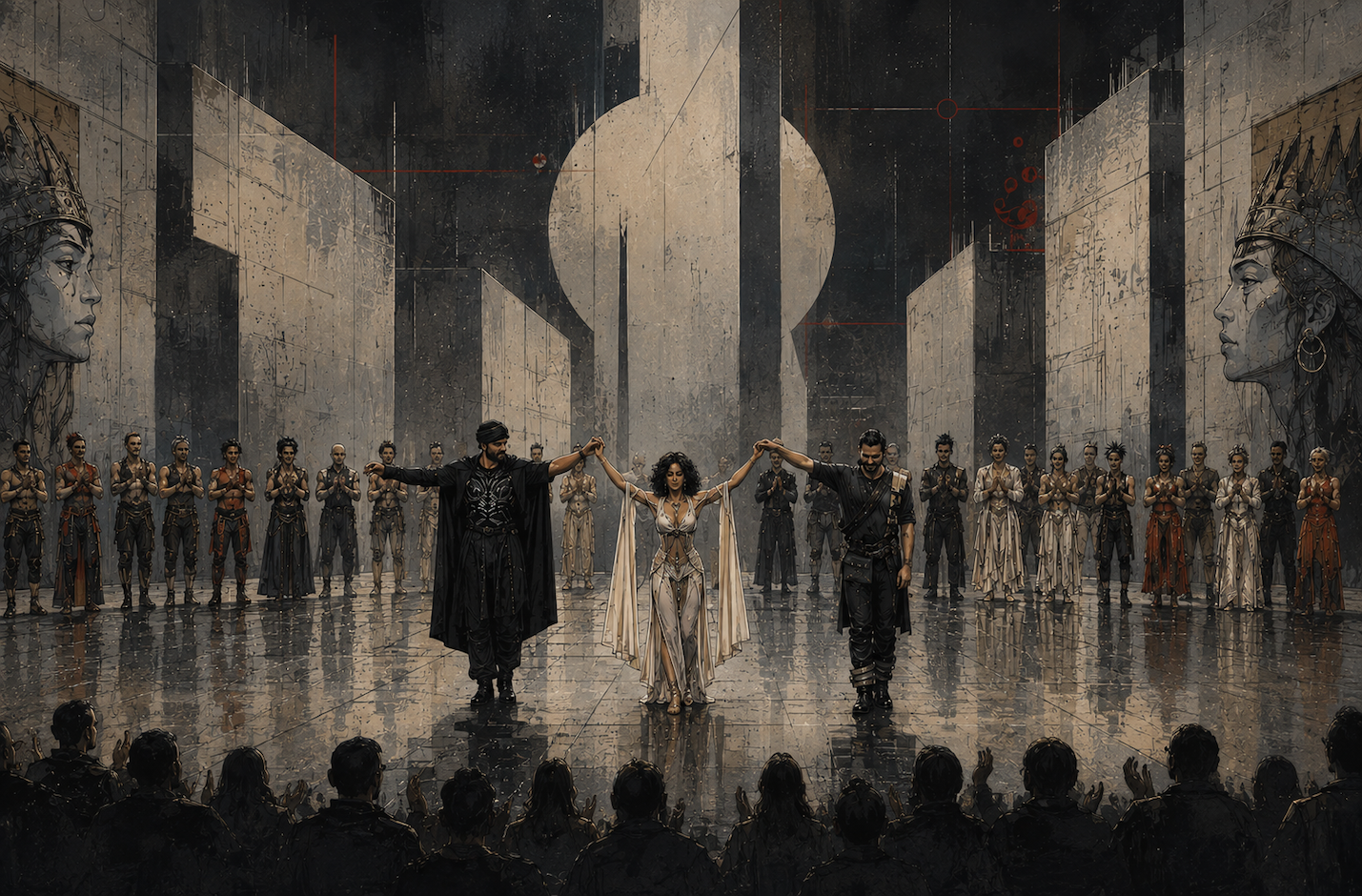
Salammbô first took to the stage in Lyon in 2000. Nearly thirty performers brought to life a two-hour production combining music, song, dance and theatre.
Playing to sold-out audiences, notably at Le Radiant and La Bourse du Travail in Lyon, the production found its audience before entering a long hiatus.
A STORY
THAT CONTINUES
After its creation in Lyon, Salammbô entered a long hiatus. But some stories never truly disappear.
In choosing Carthage, Flaubert sought to distance himself from a modern world that wearied and revolted him. More than a century and a half later, we need only look around us to see how deeply human passions, beliefs, the desire for power and conflict seem to transcend the ages.
Perhaps that is why Salammbô continues to resonate with us.
Behind this ancient war are timeless human stories: those of the characters of Salammbô — those who love, those who possess, those who believe, those who doubt, those who search for their identity, or simply for their place in the world.
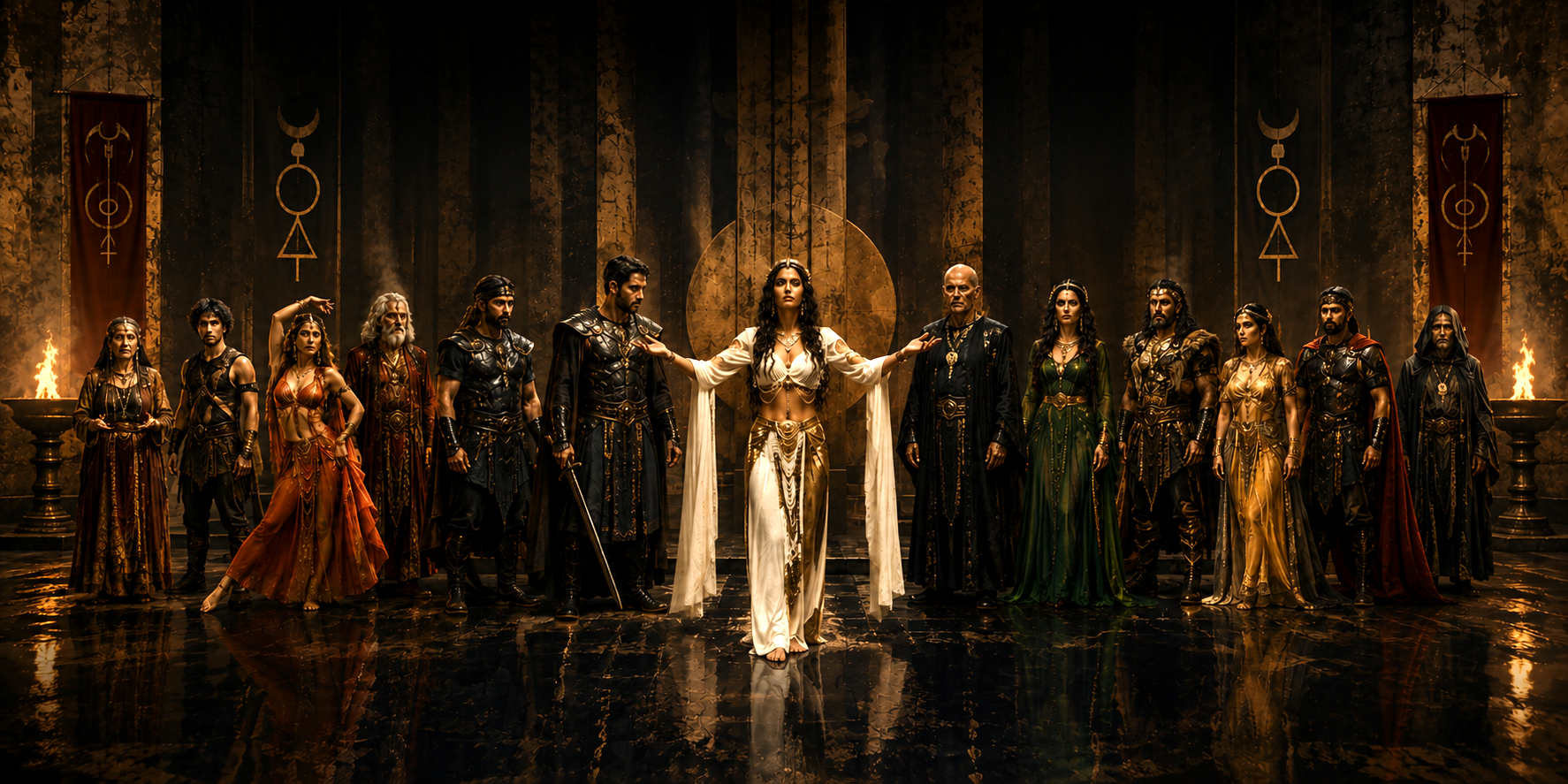
Today, new images give shape to this universe and extend the production through digital media. Not to reconstruct the past, but to carry forward a story whose questions remain as relevant as ever.
A MUSICAL AND
VISUAL FRESCO
The vision behind the musical by Lyon-based composer Pascal Revial is based on a synthesis of the arts. It draws inspiration from the ideas of Richard Wagner: “The perfect work of art is that in which all the arts cooperate towards a common purpose,” and, for its staging, from the approach of Eugène Ionesco: “Everything is play; everything is movement; everything is dynamism.” These influences are joined by that of American musical theatre, where artistic ambition meets the power of popular entertainment.
Like its music, which moves through rock, jazz, electronic music, funk, classical music and Eastern sounds, its visual universe also refuses boundaries.
Salammbô thus takes shape at the crossroads of several artistic languages. Voice, movement and image do not simply accompany the narrative: they are an integral part of its dramaturgy. From one scene to the next, atmospheres shift, influences intersect, and the music accompanies the characters through their desires, their conflicts and their choices.
The aim is not to recreate historical Carthage, but to evoke its myth, its power and its sacred dimension. Bodies, textures, colours and light compose a world outside time, where each scene tells its story through images as much as through words or music.